Sunday, April 1, 2012
The Other Side of Suffering by John Ramsey
I was twelve at the time of Christmas 1996, so I have very strong memories of the Ramsey murder case. I remember the way that the media tore into the story; I remember the images splashed all over televisions and tabloids. This book, while about John Ramsey's journey of suffering and healing, starts out with and spends a fair amount of time on the loss of his youngest daughter. There are details that I knew along with things that I had known at the time but forgotten (such as John losing his oldest daughter in an accident only years before) and things that I never knew about the family (like how they never went back into their Boulder home after leaving it after the murder was discovered). The book talks a lot about John's religious faith and how it has provided comfort and guidance to him over the last two decades. Perhaps unsurprisingly, he frequently goes to the book of Job, but it's clear that his faith is something that is very deeply a part of his identity. This will be a book that will be of interest to readers of true crime as well as people looking for spiritual guidance through tough times.
I received a review copy from NetGalley courtesy of FaithWords.
Find it at IndieBound.
Read it with:
The Death of Innocence by John and Patsy Ramsay
JonBenet: Inside the Murder Investigation by Steve Thomas with Don Davis
Madeleine by Kate McCann
Monday, March 26, 2012
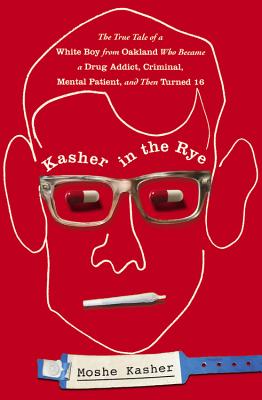
Kasher in the Rye by Moshe Kasher
Kasher in the Rye is more than just an awesome title with a clever cover. It's a very funny, very honest, very compelling memoir. In writing about his early life, Kasher points out the factors that had an impact on his life without getting bogged down in assigning blame. The candor with which he writes gives this book an authenticity and it made me root for this messed up boy who was doing such terrible things. There's a part of me that would love a counterpoint memoir from his brother, not because I want to disprove anything in this book or poke holes in it, but I am just so genuinely curious about what things were like from his brother's perspective. Some of the scenes just scream cinematic potential (the secret intervention from an interpreter, the discovery of a deaf kid at one of his schools), which again speaks to the pictures that Kasher is able to paint with words. I want more from him and his point of view - there is his comedy, of course, but I'm also greedy enough to want more books from him.
Find out more information about him at his website.
I received a review copy from NetGalley courtesy of Grand Central Publishing.
Find it at IndieBound.
Read it with:
Catcher in the Rye by J.D. Salinger
Teen Angst? Naaah by Ned Vizzini
We All Fall Down by Nic Sheff
Friday, February 24, 2012
Whatever Happened to Pudding Pops? by Gael Fashingbauer Cooper and Brian Bellmont
As a pop culture enthusiast, resisting this book was a futile effort. I eagerly paged through the book, thinking back at things I'd experienced in my own life (Connect Four, Choose Your Own Adventure, TV theme songs) and things that I've seen covered in other nostalgia-based works. Owing both to a slightly different age bracket as well as a different country of origin (Canada, which has its own lost tastes, toys, and trends), there were many things here that I was learning about for the first time (Zoom, O'Boisies, the Hal Needham stunt set). One of the limitations of reading this book was that, as a paper book, it was entirely self-contained. At many times I wished I was reading it with my laptop so I could do Google image searches, look up unknown names on IMDB, and (the biggest wish) check out old commercials on YouTube. My longing for web connections also had me thinking about my own era and if we will continue to have the same time of "What happened to...?" or "Remember the..." publications that have come before. When so many things are catalogued online and details are just a wikipedia click away, will we ever have to wonder what happened to a forgotten memory? I'm not so young that I don't remember a time before the internet, so I know the difference that finding online evidence can make in validating a childhood memory (there are still a few that I can't anyone else remembering). At any rate, Whatever Happened to Pudding Pops is a fun look back at a 'simpler time' and the stuff that has captured the imaginations of a generation of people.
Check out the blog that spawned the book, GenXtinct.
Find it at IndieBound.
Read it with:
Sunshine by Norma Klein
The Official Preppy Handbook edited by Lisa Birbach
Just Can't Get Enough: Toys, Games, and Other Stuff from the 80s that Rocked by Matthew Robinson and Jensen Karp
From Abba to Zoom: A Pop Culture Encyclopedia of the Late 20th Century by David Mansour
Totally Tubular 80s Toys by Mark Bellomo
Saturday, November 19, 2011
The One Week Job Project by Sean Aiken
This is a fun concept. It's not something that I have the personality or the inclination to do, so I get to live vicariously through this person's experiences. It's easy to be skeptical or even cynical about this experiment. On one level, there's the question of the job experience. How much can you really experience in a week? If you step into a job with no experience and little training, are you really doing the job or are you shadowing? Some of that is just a semantic difference, and Sean Aiken does a good job of explaining how the project worked and what experiences he did have. I also found myself wondering how, for lack of a better word, 'genuine' this project was. Aiken, from very early on the project, used social media and web technologies incredibly smartly. He was able to promote the project and himself. In the book, he admits that he anticipated writing a book about the project. At the end of the 52 weeks, he doesn't really come away with a job that's right for him; he comes away with a job/career that he's created for himself through the One Week Job Project. Would it have been more satisfying for me as a reader to find out that at the end of the project he had decided that he really did want to be a brewmaster (week 19) or a yoga instructor (week 7)? Would that have been more "honest"? Probably not, and then we wouldn't be reading this book, which creates a weird kind of loop. Besides, this book is just as much (if not more) about Sean and his relationships with others (his parents and family members, his friends, his new girlfriend) while he goes on this journey.
But to the book itself! It's is structured really well and hooks you in and keeps you interested. It's a fun read. This has been marketed (or at least I have seen it being marketed) to the 'just out of school' crowd, but I think it is a story that will resonate with anyone who has ever wondered if there's a perfect job out there for them.
See more at the One Week Job website.
It's also a movie; view the trailer here.
Find it at IndieBound.
Read it with:
The Happiness Project by Gretchen Craft Rubin
Living Oprah by Robyn Okrant
The Year of Living Biblically by A.J. Jacobs
Not Buying It by Judith Levine
Friday, October 21, 2011
The Next Day by Paul Peterson and Jason Gilmore and illustrated by John Porcellino
Suicide is often a subject that people resist talking about. Death is a big mystery, and the idea of purposely ending one's life is confusing and distressing and often must include taking a look at underlying mental health issues. In four separate narratives, Tina, Ryan, Chantel and Jenn each describe what led them to the moment of suicide and then what it was like to find themselves alive. Living was not the end of the story; it did not cure or stop the issues that they were dealing with. The line drawings that accompany the story accentuate it but never overpower it; they seem like the perfect illustration for The Next Day. This is not an easy book to read but the story (and stories) are so important. This book is part of a larger project that also includes a documentary. Find out more at www.thenextday.ca.
I read a review copy at NetGalley courtesy of Pop Sandbox. This book was available in Canada in May 2011 and is scheduled to be available in the US at the beginning of November.
Find it at IndieBound.
Read it with:
Map of My Heart by John Porcellino
On Suicide by Emile Durkheim
How I Made it to Eighteen by Tracy White
Skim by Mariko Tamaki
Hello, Cruel World by Kate Bornstein
Friday, October 14, 2011
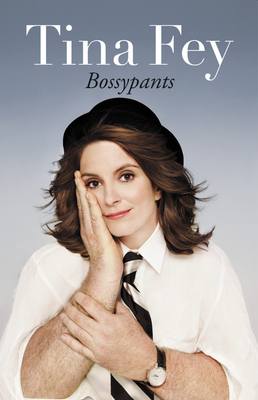
Bossypants by Tina Fey
Bossypants, as you might guess from the cover, isn't a typical star memoir. It’s a quick look at Tina Fey's childhood and early life and then more on her time at SNL and then at 30 Rock. Mixed in with all of this is a narrative of what it’s like to be a woman in power in the entertainment business. It’s funny and down to earth and honest – in a guarded kind of way (which I respect). Reading this book reminded me that no matter how sick I sometimes might get of Liz Lemon, I want to see more from Tina Fey.
Read it with:
Is Everyone Hanging Out Without Me? (And Other Concerns) by Mindy Kaling
Live From New York by Tom Shales
Happy Accidents by Jane Lynch
Tuesday, August 2, 2011
I'm Just Sayin'! by Kim Zimmer
I started watching soaps in the mid-1990s when I was a young teenager. I watched the CBS soaps (Young and the Restless, Bold and the Beautiful, As the World Turns, and Guiding Light) mainly because those were the only ones that the old TV at our cottage could pick up with decent reception. When I started, Reva had just come back to the canvas after a five year absence (she had driven her car off a bridge in Florida and years later had been discovered living with an Amish family); she was married to Buzz and Josh was with Annie and I was torn because I liked Annie (until she went crazy, and then I loved her in a different way). I was watching during the Clone storyline, the 'Michelle befriends an angel' storyline, and the 'Vanessa fakes her own death and then reconnects with Matt over this new thing called the Internet' storyline. In those days, I could usually get home from school in time to catch the last thirty minutes of the show, meaning it was the only one (aside from Y&R, which aired from 4:30-5:30 on a local station) that I could watch regularly and not just at Christmas and summer vacations.
When I first started watching, I used to quiz myself on the characters' names as their pictures appeared.
Over the next ten-twelve years, I still kept up with soaps, and still loved them, but didn't watch them with the same regularity. I started high school, and could no longer get home to watch Guiding Light. At university I was usually in class (except for a semester where I randomly started watching Days of Our Lives with another girl from our dorm - it was the only time we ever hung out). Then, the summer before I finished library school, I found that I was working mostly evenings and didn't have to be at work until 5pm. I found my way back to soaps, and was most connected to Guiding Light. After finishing school and getting a full-time position, I was able to indulge in some luxuries - like a DVR. Guiding Light was one of the first shows that got a series pass.
By this time, though, the series had been cancelled. After seventy-two years on radio and television, Guiding Light was ending. Over the summer I watched as storylines wrapped up and characters faced tragedy and happiness; I welcomed back favourites and got caught up in the show. I watched the final show on September 18, 2009 with tears streaming down my cheeks; when it ended, I pressed play and watched it again. I spent the weekend watching youtube videos from the 80s and 90s, tearing up and thinking about what might have been. I was surprised by my reaction, but I am not exaggerating when I say that I grieved for the show.
Whenever a reader picks up a book, they bring to it their own personal history. All of this is to help explain what I brought to reading this book. I have been waiting for this book since the show went off the air almost two year ago. If anyone was going to write a book like this, it would be Kim Zimmer. I expected it to be an honest account of the drama surrounding the last few years of Guiding Light - on screen and off. And, sure, that's there, but that's only part of it. It's also Zimmer's story of how she became a working actress.
It's a story of what being a 'soap star' looks like from behind the scenes. It's tidbits like how great a guy Alec Baldwin is or how Zimmer once tried to walk off Oprah's show in the middle of taping. It's also the story of how Zimmer was self-medicating with wine during the last few years of Guiding Light. It's the story of how she got a DUI and how that refocused her life. It's the story of living with menopause. It's a story of how she and her husband made a showbiz marriage work. It's a story of what it was like to be at the end of four soaps: The Doctors, Santa Barbara, Guiding Light, and now One Life to Live.
But it is also about Guiding Light. There are tributes to cast members that she was close to and stories about life behind the scenes. She talks about her frustrations with storylines and how she production models changed over the years. She details her tense relationship with executive producer Ellen Wheeler and shares how hurt she was by things like the Daytime Emmy's insulting "tribute" to Guiding Light. She also details how the cancellation of Guiding Light happened at the same time as the death of her mother, and how this affected her and framed her reactions to fans who were mourning the show.
I still love and believe in soaps, but with the cancellation of Guiding Light in 2009, As the World Turns in 2010, and the cancellation/medium shift of All My Children this year and One Life to Live next year, they are a format in transition. I hope to one day read a big account of this time period, like The Late Shift or Live From New York.
But back to I'm Just Sayin'! Reading this book is like inviting Kim Zimmer to a long lunch and then getting to ask her all the questions you've been wanting to know about. Since most of us won't ever have the chance to do that in person, thank goodness for this book.
Find it at IndieBound.
Read it with:
Afternoon Delight: Why Soaps Still Matter by Carolyn Hinsey
Jonathan's Story by Julia London and Alina Adams
Lorelai's Guiding Light: An Intimate Diary by Lorelai Hills
Changing Shoes by Tina Sloan
Guiding Light: A Fiftieth Anniversary Celebration by Christopher Schemering
Monday, May 23, 2011
Bitter Medicine by Clem and Olivier Martini
See more at Freehand Books.
Find it at IndieBound.
Read it with:
Tangles by Sarah Leavitt
Letters from the Lost by Helen Waldstein Wilkes
Too Bad by Robert Kroetsch
The Grizzly Manifesto by Jeff Gailus
Cinco de Mayo by Michael Martineck
Friday, April 22, 2011
Tangles by Sarah Leavitt
Tangles was on the short list (ten titles) for the Alberta Readers' Choice Award.
Find it at Sarah Leavitt's website.
Read it with:
Fun Home by Alison Bechdel
Bitter Medicine by Clem Martini
Essex County by Jeff Lemire
One! Hundred! Demons! by Lynda Barry
Finding Rosa by Caterina Edwards
Tuesday, April 19, 2011
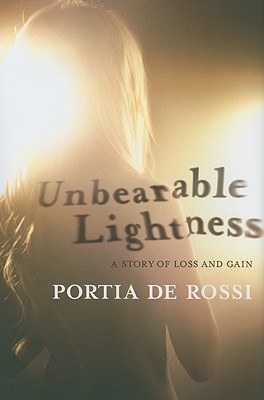
Unbearable Lightness by Portia de Rossi
In addition to the detailed accounts of the anorexia, Unbearable Lightness also provides a really interesting look behind the scenes of a hit TV show. Portia De Rossi joined the show when it was at its hottest, but then it eventually cooled down before being canceled after its fifth season. The bulk of the story ends before Portia and Ellen started dating, although Portia does touch on it near the end of the book. I would totally be interested in reading a sequel about the next part of her life if she chose to write one.
Find it at IndieBound.
Read it with:
High on Arrival by Mackenzie Phillips
Prairie Tale by Melissa Gilbert
Unsweetined by Jodie Sweetin
Love, Ellen by Betty Degeneres
Wednesday, November 17, 2010
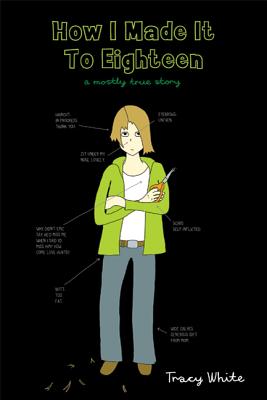
How I Made it To Eighteen by Tracy White
How I Made it to Eighteen starts out with this note from Tracy:
“This books is only mostly true because I’ve skipped over things, moved events around, embellished, and occasionally just plain made things up. Also I wanted to respect the privacy of people and places so names and recognizable details have been changed. The technical term for this is dramatic license. I used it. The 100% true big picture facts: I did a lot of drugs. I had body image issues. I had a nervous breakdown. I checked myself into a mental hospital. I stayed longer than I’d originally intended. I got better. Eventually."
That really sets the tone for the rest of the book. It starts after she’s been in the mental hospital for forty-nine hours. She details her own struggles with depression, body image, and her mother. One of the things that I like about this book is that the main character still hides things from us. That’s something I think I assumed about graphic novels – that everything would be laid out for me and I wouldn’t have to critically think about what I was reading, but in How I Made it to Eighteen there is information that Tracy reveals near the end of the book that changes how I think about earlier parts.
Find it at IndieBound.
Read it with:
Fun Home by Alison Bechdel
The Impostor's Daughter by Laurie Sandell
It's Kind of a Funny Story by Ned Vizzini
Saturday, November 13, 2010
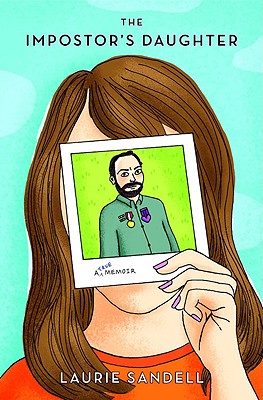
The Impostor's Daughter by Laurie Sandell
The Impostor’s Daughter by Laurie Sandell’s vibrant colours just jump right off the page, but underneath the bright colours is a memoir that touches on mental stability, addiction, relationships with parents, and identity. Laurie’s father was always a larger-than-life part of her childhood. His stories and his genius overshadowed the rest of the family. As she got older, though, Laurie started to wonder about his stories, and when she started fact-checking, she realized that they were all made up. Everything he’d told her was a lie. Even worse, he had been using her name and social security number to take out multiple credit cards that all had huge balances owing on them. Laurie decided to write about her father’s life, but this decision angered the rest of her family and threatened to drive a permanent wedge between her and her parents. With a bold frankness about sex, addiction, and relationships, The Impostor’s Daughter is a gripping story about how one’s own identity is wrapped up in other people.Definitely do not miss this one.
Find it at IndieBound.
Read it with:
How I Made it to Eighteen by Tracy White
The Hole We're In by Gabrielle Zevin
Persepolis by Marjane Satrapi
A Romanov Fantasy by Frances Welch
Freddie and Me by Mike Dawson
Monday, November 8, 2010
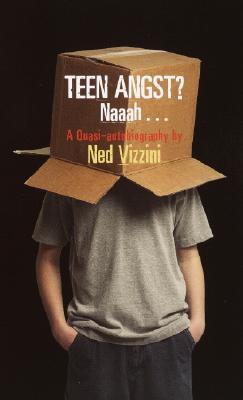
Teen Angst? Naaah...by Ned Vizzini
In a series of short episodes, Ned Vizzini captures the very essence of what it means to be growing up in the 1990s. Written while a teenager himself, Ned uses humour and an amazing eye for detail and nuance to construct a book that reaches far beyond his own single experience. I have to admit - I might be predisposed to be attracted to this book because I wrote an almost identical one when I was in high school. Sure, it wasn't about a New York high school student named Ned, but it was about me, and framed in little vignettes, and chronologically covered my high school career. Was it as good as this one? If I'm being honest, no...although I do think living in/near New York was an advantage, Ned Vizzini is really very talented and you can see it in this book. I can't wait to get my hands on his other books.
Find it at IndieBound.
Read it with:
Be More Chill by Ned Vizzini
It's Kind of a Funny Story by Ned Vizzini
Talking to Girls About Duran Duran by Rob Sheffield
Halo by Alexandra Adornetto
Cringe edited by Sarah Brown
Be True to Your School by Bob Greene
Saturday, October 30, 2010
Ballroom! by Sharon Savoy
I've been clamouring for a teen novel (or even adult novel) set in the world of ballroom dance, so when I had a chance to read this book, even though it is non-fiction, I jumped at the opportunity. I have to confess that I didn't know anything about Sharon Savoy or her dance career, or anything about exhibition or adagio dancing. I am a big figure skating fan, though, so I had a bit of background when she was talking about lifts, moves, and dance styles, as well as sport politics. Rather than being a memoir that spans an in-depth look at her entire career, it focuses in on the Blackpool experience in 1990. This book is one that I think benefits from the existence of youtube, because after I read it I could go and look up several of Sharon Savoy's dances, including the Bolero number that she details in the book. This enhanced my reading experience tremendously. There were a few points where I wished for a bit more editing (usually to clear up unclear passages), such as at the beginning of chapter four where there is an awkward transition from talking about gay men to "real men" (I hope as opposed to boys). This story, though, could not have been told by a professional writer, as it needed Savoy's experience and observations to make it the story that it was.
Find this book at University of Florida Press.
Read it with:
Ice Dancing by Nicholas Walker
Ballroom Dancing by Paul Bottomer
The Blackpool Highflyer by Andrew Martin
Let's Dance! by Cal Pozo
Monday, May 17, 2010
Living Oprah by Robyn Okrant
I have to admit that I've never really been an Oprah viewer, not for any particular reason, but mostly because it was never on when I was able to watch it. I was curious, then, to see what kind of advice Oprah gave out. Robyn (I'm not sure why I keep calling her by her first name, when I would normally call authors by their last name - maybe because I feel like I've spent some time with her?) kept track with charts and graphs of all of this information: what Oprah said, how much it cost, how long it took, and any notes. I really liked the tone that Robyn took with the whole exercise. She seemed willing to give most things a try, and there wasn't really any of that anti-Oprah snobbery that I thought a book like this might have. My favourite parts of the book were the passages where Oprah and Okrant's paths crossed. This is a great look at current pop culture in America; I thought it was a great read that just flew by.
Find it at IndieBound.
Read it with:
Not Buying It: A Year Without Shopping by Judith Levine
Live Your Best Life: A Treasury of Wisdom, Wit, Advice, Interviews, and Inspiration from O, the Oprah Magazine
Oprah by Kitty Kelley
The Happiness Project by Gretchen Craft Rubin
Reading Oprah: How Oprah's Book Club Changed the Way America Reads by Cecilia Konchar Farr
Tuesday, March 2, 2010
The Kids Are All Right by Diana and Liz Welch with Amanda and Dan Welch
Amanda, Liz, Dan, and Diana Welch never did lead an ordinary life. Their mother, Ann Williams, was an actress who appeared on several soap operas. Their father, Bob, was a successful businessman who was able to finance a comfortable life for the family. Then every started to fall apart. Their father was killed in an automobile accident; subsequent investigations revealed that his company was in rough financial shape and there were many, many creditors. There was even a rumor that he had been assassinated. That same year, their mom was diagnosed with cancer; she died shortly after. Amanda, the oldest, was only 19 at the time. Now orphans, the children scattered: Amanda to college, Liz to Europe, Dan to boarding school, and Diana to a new family (who tried to erase all connections to her 'previous' family). It would be several years before they all came together again.
Told in alternating and sometimes conflicting voices, the kids are all right. This is their individual story but it's also a story of a family at a point in their lives where they're not sure how to be a family anymore. Some points are happy, some are very sad, some are infuriating, some are funny. This is a book that could have a lot of crossover appeal between teen and adult audiences.
Find it at IndieBound.
Read it with:
If the Witness Lied by Caroline B. Cooney
A Little Princess by Frances Hodgson Burnett
The Glass Castle by Jeannette Walls
Sunday, February 21, 2010
Stitches: A Memoir by David Small
The book was initially marketed as a book for adults, but then started getting recognition as a title that would hold interest for teens (perhaps the most controversially as one of the finalists of the National Book Award for Young People's Literature).
Find it at IndieBound.
Read it with:
I Never Liked You by Chester Brown
It's a Good Life if You Don't Weaken by Seth
Blankets by Craig Thompson
Cancer Made Me a Shallower Person by Miriam Engleberg
Epileptic by David B.