Showing posts with label non-fiction. Show all posts

Thursday, August 23, 2012

A Daring Life: A Biography of Eudora Welty by Carolyn J. Brown

Eudora Alice Welty was born in a small Southern town in 1909. After spending time at school, as a photographer, and exploring other paths, she started gaining recognition for her writing and later became a Pulitzer Prize-winning author. In many ways, she lived a daring life - a life that spanned most of a century. Learn more about this woman, her life, and her writing in this new biography published by the University Press of Mississippi.

For many years I have been meaning to explore the works of Eudora Welty. I don't think that I've actually read any of her writing, although I do have a photograph of her library hanging in my living room. When I saw this new biography, I jumped at the chance to read it. It's concise and direct and informative; it provides not only a great introduction to the life of Welty but also the world in which she lived. There are lots of photographs to illustrate her family, her homes, and her work, and in particular her work as a photographer. I did briefly pause to think of who this book would appeal to; it's positioned as a biography for young adults, but how many young adults have read Eudora Welty? Is she on school reading lists? Is there a demand for a book like this? But then I decided that there is always a demand for well-written and well-researched biographies of accomplished women. It might take some handselling from librarians and booksellers to help people to be aware of this book, but it would be well worth including this in a non-fiction collection to have on hand for the right reader.

Check out Carolyn J. Brown's website.

I received a review copy from NetGalley courtesy of University Press of Mississippi.

Find it at IndieBound.

Read it with:
Jane Austen: A Life Revealed by Catherine Reef
The Optimist's Daughter by Eudora Welty
Eudora Welty: A Biography by Suzanne Marrs

Saturday, August 11, 2012

The End: 50 Apocalyptic Visions From Pop Culture That You Should Know About...Before It's Too Late by Laura Barcella

There are some days where it seems like the end of the world could happen at any time. Global warming, terrorism, zombies: the end is near...at least in the movies. Films, books, plays, and art show some of the ways that people have expressed their views on the end of the world. In The End, 50 different visions of the apocalypse are explored in detail, examining how the world ends (and how likely it is to happen in real life).

There was something oddly reassuring about reading this book. Almost every scenario, whether it included viruses or zombies or the flooding of the entire earth, was said to be extremely unlikely to happen in real life - or, if it did, to have very different results than are shown in pop culture. I knew that I was going to like this book when one of the first things Laura Barcella talked about was the scarcity of women in strong, leading roles during "the end." Why is the apocalypse such a male-dominated event? Where are women while the world is ending? I also love serious explorations of popular culture; while this book maintains a light, often humorous tone, it does believe that there is something to be gained from examining how authors, directors, and artists have positioned the end of the world. Like many of Zest Books' other titles, this just screams "high interest" and is worth considering for inclusion in a library's non-fiction collection.

Check out Laura Barcella's website.

I received a review copy from NetGalley courtesy of Zest books.

Find it at Houghton Mifflin Harcourt's website.

Read it with:
The Stand by Stephen King
How to Fight, Lie, and Cry Your Way to Popularity (And a Prom Date) by Nikki Roddy
Reel Culture by Mimi O'Connor
The Road by Cormac McCarthy
Z for Zachariah by Robert C. O'Brien 

Monday, August 6, 2012

How to Watch the Olympics by David Goldblatt and Johnny Acton

In one sense, it's easy to figure out how to watch the Olympics: find a TV station that has the broadcast rights or stream it online, and you're watching the Olympics. But what exactly are you watching? How does one score points in a judo match? What's the difference between kayaking, canoeing, and rowing? What are the events that make up the decathlon? What about the heptathlon? What makes the modern pentathlon so modern? And what exactly is a repechage? With chapters for each of the sports (as well as the opening and closing ceremonies, medal ceremonies, past Olympic games, and discontinued Olympic sports), How to Watch the Olympics aims to be your go-to reference book during the 2012 London Olympic Games.

As a big fan of the Olympics, the cover of this book caught my eye as I was browsing in an airport bookstore. I initially hoped that it would be a critical socio-political at the games (with possible topics including American broadcasting strategy, the amount of money spent on the games, gender equality and inequality). Instead, though, it was a history-slash-introduction of the games and the sports on display, something I was also interested in checking out. As a young girl I latched onto a copy of one of David Wallechinsky's Complete Book of the Olympics and read it over and over until the pages started falling out. That was almost twenty years ago, though, and  as I often feel with reference books, I wondered about its use in a world where so much information is available online; as I sat on my couch with my iPhone and this book, how many times would I reach for each one? I didn't keep track, but there have been times where I was reaching for the book (particularly during the cycling events). While I do think that this book would only be enhanced in some kind of ebook form that would allow links to video footage, maps, and more photographs, it can easily stand without these things (and, in fact, has to - it's very clear that this is an "unofficial" Olympic book and as such does not have any pictures of the Olympic rings, flames, or mascots). The intended audience is the average Olympic watcher - someone who might know something about a few of the sports but has little knowledge of others. It strikes a tone somewhere between chatty and instructional (and uses a lot of British expressions along the way). It could be read through from beginning to end, but also works if you want to pick it up and dip into sections as needed. I'd really love to see a companion version for the Winter Olympics as well as updated versions for future Games.

Find it at IndieBound. 

Read it with:
The Complete Book of the Olympics 2012 Edition by David Wallechinsky and Jaime Loucky
The Ball is Round: A Global History of Soccer by David Goldblatt
Gold by Chris Cleave
Inside the Olympics by Nick Hunter

Thursday, August 2, 2012

Rightfully Ours: How Women Won the Vote by Kerrie Logan Hollihan

There are many things today that women and girls take for granted: wearing pants, speaking in public, going to school, keeping their own last name when they get married. One of the biggest rights, though, has been the right to vote in elections. In the 1800s and early 1900s, women were viewed as belonging to their fathers or husbands; they were expected to dedicate their lives to their families. Many women, though, wanted more. They believed that they best way to achieve this was to push for social change - increased rights for women and ultimately the right to vote. These women included Lucy Stone, Susan B. Anthony, Elizabeth Cady Stanton, Sojourner Truth, Alice Paul, and many others. In Rightfully Ours: How Women Won the Vote, this history is presented so that the boys and girls of today can learn about the barriers that the women of the past overcame.

When I was younger I had very little exposure to books about women's history or feminist figures, so I'm always happy to see books about suffrage and women's rights aimed at a young age group. This book weaves together a narrative about the troubles and setbacks that these women faced and the accomplishments that they achieved alongside biographical sketches of the prominent figures and activities related to the text for kids to do on their own. The book illustrates how intertwined many different issues were and are; it's nearly impossible to discuss the rights of women without looking at American history in general but also the temperance movement, slavery, the Civil War, and religion. It's packed with information but also lots of great images and first-person accounts.   It was neat to discover the ties that things like The Wizard of Oz or "Mary Had a Little Lamb" had to the suffrage movement. The activities spread out throughout the book provide an interactive approach to understanding the life and times of the women depicted. It's hard to know how popular or practical these activities will be - some involve a stove or oven while others require a lot of materials that one might not have just laying around the house - but with the range of activities presented (twenty-one in total) there will likely be something that catches a reader's eye. I can also see teachers being interested in this for use in the classroom. It's a great title to have on the shelf for a school, classroom, or public library.

Check out Kerrie Logan Hollihan's website.

I received a review copy from NetGalley courtesy of Chicago Review Press.

Find it at Indiebound.

Read it with:
Elizabeth I: The People's Queen by Kerrie Logan Hollihan
Wheels of Change by Sue Macy
You Wouldn't Want to Be a Suffragist! by Fiona Macdonald

Sunday, July 29, 2012

Regretsy: Where DIY Meets WTF by April Winchell

Like most things I find on the Internet, I have no idea how I first found Regretsy. It was probably written up somewhere - a blog? Entertainment Weekly? - and I hopped over to check it out. I know that I was already familiar with Etsy and this new blog provided a window into the sort of thing that I had never seen. Photographs with random nudity, jewelry in the shape of penises and vaginas, things that say they're steampunk but they are so not steampunk... it seemed like there was no end to these incredible listings. Regretsy is also available in book form; classic items are accompanied by commentary by April Winchell.

I knew that I would love this book, but I was surprised by how much I loved it. It's more than just a collection of Regretsy's greatest hits and new entries. Each chapter has an essay that explores different aspects of the Etsy/Regretsy world. What kind of statements are vagina necklaces really making? How do you foster creativity? Does everything deserve an audience? At the end of the book there are listings of the sellers featured in the book, the bios of the sellers, and even a space for the sellers to comment on Regretsy, their inclusion, and criticism in general. These inclusions took the book from an extension of the website (which would have been enough to be a solid book) to something that explores art, commerce, creativity, and criticism, all through the lens of 21st century society. I highly recommend checking this book out.

Find it at IndieBound.

Read it with:
Cake Wrecks by Jen Yates
Read My Lips by Debby Herbenick and Vanessa Schick
That is Priceless by Steve Yelcher
Passive Aggressive Notes by Kerry Miller

Wednesday, July 25, 2012

The Violinist's Thumb by Sam Kean

Genes. DNA. Heredity. These are all things that people hear about, but how many of us really understand them? How do genes work, and what's their relationship to DNA? How was everything discovered, and who was it discovered by? Names like Mendel and Darwin, Watson and Crick are familiar, but who were the other people who played a role in the discovery of DNA? How did genes play a role in creating a brilliantly flexible violinist and a bronze-hued president? From the first tentative steps toward exploring the human body to the mapping of the human genome, The Violinist's Thumb takes you on an incredible journey of scientific discovery.

I was so excited to read this book. I had intended to read Sam Kean's first book, The Disappearing Spoon, but I still haven't picked it up. I wanted to read this one before anything else got in the way. I really liked the way the book was written. It's not always an easy read, but it's an enjoyable read. Some of the science can be quite dense, but I think that's to be expected. I wouldn't say that after reading this book I have a complete understanding of genes and DNA; saying that would be a disservice to the scientists who spend their entire careers learning about genes. I do, though, have a big more of an understanding about the questions that surround this branch of science. My favourite chapter was the one that discussed the impulse to retroactively diagnose famous people like John F. Kennedy, Abraham Lincoln, and Charles Darwin with diseases and genetic disorders; of course, having said that that one was my favourite, I have to now think about what that means about me and my enjoyment of a celebrity-obsessed culture. If you're looking for a satisfying non-fiction read that will provide you with both information and a dry, sometimes pun-based sense of humour, definitely check out this book.

I received a review copy from NetGalley courtesy of Little, Brown and Company.

Check out Sam Kean's website.

Find it at IndieBound.

Read it with:
The Disappearing Spoon by Sam Kean
The Emperor of All Maladies: A Biography of Cancer by Dr. Siddhartha Mukherjee
The Immortal Life of Henrietta Lacks by Rebecca Skloot
Rosalind Franklin: The Dark Lady of DNA by Brenda Maddox

Monday, July 23, 2012

A Dictionary of Dance by Liz Murphy

An arabesque is a ballet position where you stand on one straight leg and extend a leg backwards. Break dancing is really fast dancing that involved using your hands, head, and body on the floor. A choreographer creates the steps that other people dance. These are the ABCs of dance...and it doesn't stop there! A Dictionary of Dance celebrates dance and movement from A to Z!

Some alphabet books really are meant for children who are first learning their letters. A Dictionary of Dance, on the other hand, works best for children who are already familiar with the alphabet; letters can be learned from it, of course, but first and foremost it is a celebration of dance. From "arabesque" to "zones," these words and terms will educate and inspire young dancers. The format of bringing together different styles of dance emphasizes the similarities between different cultures. The artwork is soft and colourful and mimics fluid motion.This is a lovely book that could easily encourage the imaginations of children who dream about dancing - or spark an interest in those who have never thought about it. It would make a great gift for a dancer or a good title for a public library.

I received a review copy from Edelweiss courtesy of Blue Apple Books.

Read it with:
Broadway Barks by Bernadette Peters
Learn to Speak Dance by Ann-Marie Williams
Beautiful Ballerina by Marilyn Nelson

Friday, July 20, 2012

The Pregnancy Project: A Memoir by Gaby Rodriguez with Jenna Glatzer

It's difficult to talk about teen pregnancy in a public way. Too often it takes either one of two routes: teen parents are either villainized, judged, and written off or glamourized and placed in situations that become so unlike the majority of teen parents. For her senior project, Gaby Rodriguez wanted to look beyond those portrayals to the real people that the pregnancy involves.Teen pregnancy was something that was very present in her life: her mother had been a teen mom, her brothers and sisters had faced teen pregnancy or young parenthood, and people always told her how she was destined to follow in their footsteps. For her project, Gaby decided to get pregnant - a fake pregnancy - and see how people reacted to her. Would they think that she was living down to expectations? Would the pregnancy nullify all of her good grades and her previous reputation? What would her friends say? What would people who didn't even know her say? Gaby wanted to compile their reactions and talk about the way that pregnant teens are treated. With only her mom, her boyfriend, and a few teachers in on the assignment, she had no idea what she was heading into.

The book is divided into three parts: before, during, and after the 'pregnancy.' I had expected most of the story to focus on pretending to be pregnant, so I was surprised when so much time was spent talking about her family and detailing her relationship with her brothers and sisters. This backstory, however, was crucial to understanding how passionate Gaby was about this project. She didn't just see teen pregnancy in the abstract; she saw it as part of her life. Equally interesting was the media reaction to the story. Almost overnight Gaby was courted by major television networks wanting to tell her story. Many people would think that it would be cool to have The Today Show or Good Morning America wanting to interview you, but when Gaby describes the way that the media hounded her and, for lack of a better word, stalked her, it's not the glamorous story that you might have had in mind. I did wonder how much of this was an attempt at shaping a story - in order to make it clear that she didn't want fame or a book deal or a Lifetime movie, does she go overboard in describing how she tried to hide from the media? Possibly. But I truly do believe that the project came from a very real place, a place that was determined to make a difference and change how people think about teen pregnancy. I do think that the book would have benefited from pictures, especially ones that show what Gaby looked like during her experiment, but the words can stand on their own. At just over two-hundred pages, it's not a long book, but it does tell an incredible story.

Gaby's story is also a Lifetime movie.

Find it at IndieBound. 

Read it with:
Not Afraid of Life by Bristol Palin
Science Fair Season by Judy Dutton
Not My Daughter by Barbara Delinsky

Monday, July 16, 2012

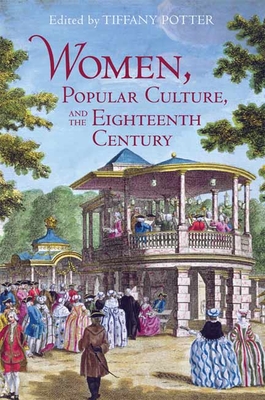
Women, Popular Culture, and the Eighteenth Century edited by Tiffany Potter

The eighteenth century is quite present in the twenty-first century. It's found in the Jane Austen novels read by bookclubs and the movies that are made from those novels. It's in our ideas of performers and performance, writing and writers, and romance. It's in the way we think about the past and how the past informs the present. Women, Popular Culture, and the Eighteenth Century brings together the work of scholars from Canada, the United States, and around the world who explore the construction of culture and pop culture over the last four hundred years and what it means for women and society today.

When I saw the title of this book in NetGalley, I knew I had to read it. I love reading about popular culture and I have spent a lot of time thinking about women and femininity, so this seemed like a perfect fit. I was extremely pleased to find that the book not only covers culture in the eighteenth century but also how it exists and interacts in today's world. Recent film adaptations of Jane Austen novels, novels set in the seventeen hundreds, and mash-ups (like Pride and Prejudice and Zombies) are all explored. There were also several areas that I had not read about before, including the role that women played in the development of the cookbook industry, stage performances and how they mirrored and directed ideas of womanhood, and the phenomenon of riddles and quizzing. The book has an academic tone and approach. It's been a few years now since I did a lot of academic reading for school, but that didn't stop me from enjoying this book. If you have an interest in any one of the three areas mentioned in the title make sure to check this book out; if you have an interest in more than one of the areas, this is the book for you.

I received a review copy from NetGalley courtesy of University of Toronto Press.

Find it at IndieBound. 

Read it with:
Northanger Abbey by Jane Austen
Slammerkin by Emma Donoghue
Love in Excess by Eliza Haywood
Artistic Impressions by Mary Louise Adams
According to Queeney by Beryl Bainbridge

Sunday, July 15, 2012

Discovery Channel's Top 10 Deadliest Sharks by Joe Brusha

The Discovery Channel has practically made an industry out of sharks through Shark Week, a week of shark-centric programming that has millions of fans looking forward to it each year. But how much do people really know about sharks? What different types of sharks are there, and how deadly are each type? How can you stay safe in the water? Check out this book for cool facts, amazing stories, and safety tips on how to avoid being part of a deadly shark attack.

Like many shark-related things, this book tries to have it both ways: using the sensationalized image that sharks have to appeal to readers who like danger and action, while using the text to
impart the importance of respect for sharks and downplaying their public persona as bloodthirsty killers. Different sections talk about how man's encroachment on the shallow coastal waters that sharks inhabit have meant that more people are going into areas where sharks live or how people engage in risky behaviour that makes them more attractive to sharks. Facts are presented in lists, pull-out bubbles, and through comic book style text boxes; there's a lot of information packed into a fairly small book.  The comic book/graphic novel style of the book makes this a great crossover style of books, appealing both to readers of fiction and non-fiction. Libraries looking to increase the amount of high interest material in their non-fiction collection (particularly high interest materials with eye-catching covers) should definitely look at adding this book to their collections.

I received a review copy from NetGalley courtesy of Zenescope.

Find it at IndieBound.

Read it with:
Face to Face with Sharks by David Doubilet
Sharks: Facts at Your Fingertips from DK Pocket Genius
Grampa and Julie: Shark Hunters by Jeff Czekaj
Discovery Channel's Dinosaurs & Prehistoric Predators by Joe Brusha
Animal Planet: World's Most Dangerous Animals by Darren Vincenzo

Saturday, July 7, 2012

Cake Wrecks: When Professional Cakes Go Hilariously Wrong by Jen Yates

If you're a fan of the Cake Wrecks blog, you know exactly what kind of wrecktacular stuff you're going to be finding in this book. Misspelled words, literal directions, icing that looks like poo, cupcake cakes, naked babies, random Darth Vaders... there's no end to what people will put on a cake. I like reading Cake Wrecks because there's that whole "Wait...what...no!...what?" aspect where I can't believe that this actually happens to people. Some of those baby shower cakes will haunt me in my dreams. Maybe I'm just blessed (cursed?) with a local supermarket bakery section who stay away from wrecks, but I've never seen anything remotely close to this in person. But I do believe that other people have, because here is the photographic evidence. The book doesn't have the depth of the blog - that's one area where hyperlinks have the advantage over paper - but it does organize the wrecks into sections and succeeds in really building up a "bam-bam-bam" pace of revealing the wrecks. The book also has a bit of "behind the scenes" information on what Jen Yates has learned since launching the blog, including why she now doesn't spend a lot of time writing on posts that are likely to be controversial. I definitely recommend checking out the blog, and if you find that it's your sense of humour, consider diving into the Cake Wrecks book.

Cake Wrecks is published by Andrews McMeel Publishing.

Find it at IndieBound. 

Read it with:
Wreck the Halls: Cake Wrecks Gets "Festive" by Jen Yates
That is Priceless by Steve Melcher
Awkward Family Photos by Mike Bender and Doug Chernack

Tuesday, July 3, 2012

Grammar Girl's 101 Troublesome Words You'll Master in No Time by Mignon Fogarty

Writing can be hard. Not only do you have to take an empty page and fill it with words, you also have to be careful to avoid misspellings, grammar errors, and using the wrong word. Where can you go to find out the answers to all of your grammar questions? The Grammar Girl, Mignon Fogarty, has been solving people's tough questions for years, and in 101 Troublesome Words You'll Master in No Time she takes on some tough words that you might have spent some time scratching your head over in the past - but scratch no more, because help is on the way!

I find word usage really interesting; I like learning about how words have changed over time and what the origins of certain words are. It seems like a lot of the confusion over words or tenses comes from a tension between British usage and American usage; Canadian usage is often a mixture of the two, so even with this book as a guide things still seemed to be a bit up in the air. I am most familiar with Grammar Girl on Twitter and had never really checked out her site, so her style of writing was new to me. I liked it. It was conversational and forgiving and less "hard and fast" than I was expecting a grammar guide to be. Grammar purists might not like all of the "in common usage, you can probably keep doing what you're doing" advice, but I really respect her focus on clear meaning rather than the strict following of grammar rules (and besides, grammar purists are probably busy pulling their hair out over Twitter or reality TV or something like that). Including examples from TV, movies, and books also helped to ground the discussion in actual real-world usage. If you're working for an organization that has its own style guide, you should definitely stick to that, but if you're looking for some helpful clarifications for your own writing, this is one title that you will want to peruse.

Check out the Grammar Girl website.

I received a review copy from NetGalley courtesy of St. Martin's Press.

Find it at IndieBound. 

Read it with:
Grammar Girl's 101 Troublesome Words You'll Master In No Time by Mignon Fogarty
Grammar Girl's 101 Words to Sound Smart by Mignon Fogarty
The Elements of Style by William Strunk and E.B. White
I Used to Know That by Caroline Taggert

Sunday, July 1, 2012

Little Canada by Matt Napier illustrated by Renné Benoit

Canada isn't a little country. It has ten provinces, three territories, and is the second largest country in the world in terms of area. It can be difficult for young children to understand: what is Canada? This board book can help answer some of those questions. Set up in a question-and-answer style, the book explores lots of Canada's common symbols, animals, and cultural aspects. There's enough of a pause (and some visual clues) that kids have a chance to figure out the answer; books that encourage them to talk and use their words help to build their confidence when it comes to language and literacy. I'll admit that it was a bit strange to see the appearance of poutine (delicious, delicious poutine) in a children's picture book, but it also seemed to fit into the style of the book. (The mid-book plug for Tim Horton's, too, was a bit of a surprise, but in terms of Canadian culture, not out of place). The board book pages are sturdy for young readers, and it would make a good gift for new Canadians, ex-pat families, or people wanting to make sure that their little ones grow up with the appropriate amount of Can-con.

Happy Canada Day!

Learn more about Matt Napier and Renné Benoit.

Find it at IndieBound. 

Read it with:
Canada by Liz Sonneborn
Z is for Zamboni: A Hockey Alphabet by Matt Napier
Fraser Bear: A Cub's Life by Maggie De Vries
Good Night Canada by Adam Gamble

Tuesday, June 26, 2012

A Passion for Victory by Benson Bobrick

Every Olympic cycle, there's a new crop of hungry athletes looking to make their golden dreams come true; there's also a new crop of books about the International sporting event. Schools and libraries in particular need to make sure their collections are current and relevant and cover not only today's athletes but also athletes from games past. What sets A Passion for Victory apart from other books is that it explores the area that other books often skip over: the origins of the Ancient Olympics and the first Modern Olympic Games. Sure, many books talk about the ancient traditions or talk about Pierre de Coubertin, but it's often just a cursory look on the way to focusing on today's sports stars. This book looks closely at the Greek traditions and the people who shaped the development of the Olympics. It also stops around mid-20th century in terms of the Modern Olympics. Because of this focus, it wouldn't make sense for this to be the only book on the Olympics that you have (particularly if you're looking for something that will discuss the games to the present day), but it would make an excellent addition to any sports collection.

I received a review copy from NetGalley courtesy of Random House.

Find it at IndieBound.

Read it with:
The Battle of Nashville by Benson Bobrick
Rush For Gold: Mystery at the Olympics by John Feinstein
The 2012 London Olympics by Nick Hunter

Friday, June 15, 2012

Star Trek FAQ by Mark Clark

Much has been written about Star Trek in the more than forty years since the Starship Enterprise first appeared on television. People have looked at its science and its ethics; the stars have written about their behind the scene experiences. Novels expand on what was shown on screen and reviews place it in the context of popular culture. Star Trek FAQ bills itself as "Everything left to know about the first voyages of the Starship Enterprise," and that's what it puts forward. It has chapters dedicated to the creators, writers, actors, directors, guest stars, and anyone else who came in contact with the show. It discusses the sources that came before the show and the revivals that came afterward. If you have a question about Star Trek, this book probably has the answer.

There is a part of me that wonders if there's still a market for books like this. Couldn't you just look at a wikipedia page? Wouldn't you get the same information? And while I think you can, there is something so satisfyingly authoritative about a thick book that brings together so many different sources and topics. There was probably more that I needed about the actors previous roles, but it was helpful for filling in information about their lives before Star Trek. I don't know if the book is designed to be read straight through, like I did; some of the sections are repetitive, even down to the same phrasing. But if you're just starting where you're curious, this probably is less noticeable. What this book did quite well was get me excited about Star Trek. Talking about the episodes and the storylines made me curious to see more. I know a bit about the show, but only culturally; I know I've seen some episodes but I've never really sat down and watched one (although I was quite into Star Trek: The Next Generation) and I've only seen a few of the movies. Now, though, I feel like I have a deeper understanding of the series and want to actually experience it. Super fans (Trekkies, if you will), won't likely find too much new in here, but fans of television and pop culture (as well as library non-fiction collections) should definitely give it a look.

I received a review copy from NetGalley courtesy of Hal Leonard Books.

Find it at IndieBound. 

Read it with:
I Am Spock by Leonard Nimoy
To The Stars by George Takei
Beyond Uhura by Nichelle Nichols
Beam Me Up, Scotty by James Doohan
Inside Star Trek by Herbert F. Solow and Robert H. Justman
Star Trek Memories by William Shatner

Sunday, June 10, 2012

My Every Single Thought: What I Think About Being Single by Corinne Mucha

What does it mean to be single? Is it enough to say that you're not in a relationship? What does it mean when you're in a relationship? How do you meet new people? How do you deal with not wanting to meet new people? These are some of the questions that flow through Corinne's brain. Single seems like it would be clear enough: one thing. Is that it? How can that be an adequate answer? If you've ever pondered a future alone with books and cats - and you don't even like cats - then you might have already had some of these thoughts. But I guarantee you haven't experienced them like this.

I first discovered this book while browsing on the Buy Olympia website. I was hungry for some zines and bought it along with one by Ed Choy Moorman...and then it sat on the arm of my couch for a long time. Why? I don't know. Maybe I wasn't in the right mood. Maybe I was waiting for the day where I would get up from my other couch (yes, I have two couches; yes, I spend a lot of time sitting) with purpose and grab it and not want to let it go. I didn't just read this; I devoured it. I laughed, I thought, I said "ouch" when things got too close. I loved the idea of a single Barbie. I love the exploration of words that rhyme with "single" and the interview with the single sock. I loved the ending. I loved all of it. If you are single, you need to read this. Period. I love the humour, I love the art, and I love Corinne Mucha's voice.  I can't wait to get my hands on more of her work. Could this have been the best $5 (American) I've ever spent? Quite possibly...yes.

See more of Corinne Mucha's work at her website Maidenhousefly.

Read it with:
Freshman: Tales of 9th Grade Obsessions, Revelations, and Other Nonsense by Corinne Mucha
Stitching Together by Ed Choy Moorman
My Alaskan Summer by Corinne Mucha

Tuesday, June 5, 2012

Death by Petticoat by Mary Miley Theobald

There are some things about history that everyone knows, right? People were shorter back then. People were painted hiding their fingers and limbs because painters gave a discount if they didn't have to paint those body parts. Apprenticeships lasted seven years, pregnant women never went outside, there was a nail tax in Colonial America - these are all thoughts that are commonly passed along as fact. This book examines those history myths and separates truth from myth, misconception, and outright falsehood.

This is such a smart idea for a book. Myths and misconceptions abound in many parts of popular culture, and of course there will be those that persist about American history. I loved learning about the truth behind custom, clothing, trades, and American life in a number of different time periods. I was amazed at how many myths are shared between different time periods and different locations worldwide. There are a number of myths here that I hadn't heard before, particularly those that pertain to specific parts of American history, but it was still fascinating to hear how the ideas have come to be a part of common knowledge and what - if any - kernel of truth is found in those myths. I also love the design of the cover. Check out those cool skulls!


Check out Mary Miley Theobald's website for a list of her other publications.

I received an advance review copy from NetGalley courtesy of Andrews McMeel.

Find it at IndieBound.

Read it with:
Colonial Williamsburg: The First 75 Years by Mary Miley Theobald
Johnny Tremain by Esther Forbes
Legends, Lies, and Cherished Myths of American History by Richard Shenkman

Saturday, June 2, 2012

Uncle John's Kid-Topia Bathroom Read for Kids Only

A Tyrannosaurus Rex would have had terrible breath. There's a restaurant in Taiwan where diners sit on toilets instead of chairs...and eat food out of miniature toilets. The Saxons would go to battle with wildly coloured hair in order to scare their enemies. The University of CA - Santa Cruz has a sports team named the Banana Slugs. A thief was arrested because he broke into a house, logged on to his Facebook page..and then forgot to log out before he left! These are just some of the amazing things that kids can learn in Uncle John's Kid-topia Bathroom Reader for Kids Only.

I don't remember the first time I read one of Uncle John's Bathroom Readers, but I know that I've been a fan for a long time. I like the short entries and the wide-ranging topics that the books cover. This book has special content to appeal to kids: food, science, art, animals, and (of course) bathrooms. There are also word games and quizzes for people who want to do more than just read. The review copy that I was reading looked there was some space left for later additions of graphics and details, so the finished product should have lots of high-interest eye-grabbers to keep kids reading. Don't think of this book just in terms of bathroom reading. It would also be a great book to pick up before a long car trip; the games, stories, and fun facts could keep young readers (and the young at heart) occupied for ages.

I received a review copy from NetGalley courtesy of Baker and Taylor/Portable Press.

Find it at IndieBound.

Read it with:
Uncle John's Creature Feature Bathroom Reader for Kids Only
Uncle John's Book of Fun Bathroom Reader for Kids Only
Uncle John's Top Secret Bathroom Reader for Kids Only

Thursday, May 31, 2012

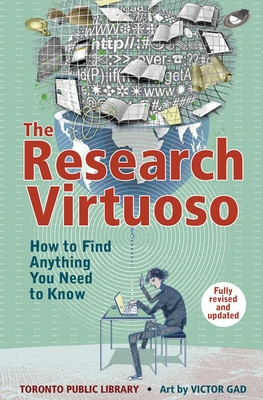
The Research Virtuoso: How to Find Anything You Need to Know by the Toronto Public Library with art by Victor Gad

Research: if you're in school, you're going to have to do it at some point. There will be a class that requires an essay or a project and you will have to know how to find information, assess it, and bring it together in a meaningful way. It can seem like a daunting task, and there are so many different ways that you can go about it. The Research Virtuoso can help you clarify your assignment, collect your thoughts, and follow through with a solid end result. This is one book that could help you get an A - and help you build some skills you can use throughout your life.

This is an updated edition of an earlier publication, which is a very smart move considering all of the ways that today's technology plays a role in information gathering. Online resources are covered (including Wikipedia and the standard cautions around using it as a definitive source) but they are found alongside print resources and subscription databases. In addition to instructions about how to research a topic The Research Virtuoso also includes templates and tips to get you started. There are definitely some ideas that I wish I knew about when I was in school. The tone is authoritative (and it should be, coming from the Toronto Public Library) but not stuffy; if this book was a person, it would be your cool older cousing who's in graduate school. This might not be a book that high school or university students run to pull off of the shelves (or maybe it is), but it's definitely a book that they should look into.

I received a copy from NetGalley courtesy of Annick Press.

Find it at IndieBound. 

Read it with:
Research Ate My Brain by The Toronto Public Library
The New York Public Library's Guide to Research by Deborah Heiligman
Painless Research Projects by Rebecca Elliott

Friday, May 18, 2012

Women Will Save the World by Caroline A. Shearer edited by Sarah Hackley

Inspired by a quote from the Dalai Lama that "The world will be saved by the Western woman," Caroline A. Shearer had a vision to bring together accounts of feminine traits such as collaboration, nurturing, creativity, strength, and intuition. Women Will Save the World is filled with biographies of historical women who made a difference as well as essays written by women of today who have faced many different obstacles - medical, financial, spiritual - and survived.

Many of the women profiled were new to me, and I always appreciate the opportunity to read about successful women and learn how they have accomplished what they have. I also enjoyed the short biographies of the more well-known historical figures. This approach helped to ground the essays in a feminist and historical context. At times I did feel that the focus of the book was narrowing; without taking anything away from the contributors who are profiled in this book, I would love to hear more from other women from many different backgrounds.  I sometimes lost the thread of how this was going to "save the world" while at other times thinking that it veered into self-help territory. I think, though, that ultimately those two go hand-in-hand. How can women 'help' themselves? By using the traits and behaviours of positive female role models. Women Will Save the World isn't trying to be everything to everyone; its focus is on sharing stories of strong, successful Western (in this case, American) women. Read this in connection with some other explorations about female power and see all of the ways that women have been and will continue to contribute to the world.

I received a review copy from NetGalley courtesy of Absolute Love Publishing.

Find it at IndieBound.

Read it with:
No Excuses by Gloria Feldt
Women of Color and Feminism by Maythee Rojas
Feminism and Pop Culture by Andi Zeisler
Dead End Date by Caroline A. Shearer