Showing posts with label Canadian. Show all posts

Sunday, August 19, 2012

Scott Pilgrilm Volume 1: Precious Little Life by Bryan Lee O'Malley

Scott Pilgrim's life is pretty uncomplicated. At 23 he lives in a tiny apartment with his gay roommate Wallace, he plays in a band called Sex Bob-omb, and he's dating a high school student (which sounds like it could be complicated, but since they've barely ever even hugged, it's a pretty laid-back relationship). Then he starts dreaming of a strange girl with roller-blades and awesome hair. Who is she? How did she end up in his head? When the girl - Ramona Flowers - materializes in his real life, he has to make sure he's not dreaming... then he has to find a way to make her want to spend time with her. He keeps hearing something about her evil exes, but that's can't be too bad, right? Right?

This is the first time that I've written about a book for a second time, but I think that a full-colour edition with extra behind-the-scenes content warrants talking about this book again. I originally picked up the Scott Pilgrim series because of the then-upcoming movie with Michael Cera; I've since seen the movie, so it's almost like I can never un-see it through that lens. But this re-read let me focus on the details: the way that the backgrounds really looked like Toronto areas, the casual awesomeness of Kim Pine, the easy blend of real life and video game fantasy. If you've never read the series, now is the time to pick it up and check it out in full-colour glory, and if you have read the series I guarantee you haven't seen it like this before.

Check out Scott Pilgrim online and Bryan Lee O'Malley's website.

I received a review copy from NetGalley courtesy of Oni Press.

Find it at IndieBound. 

Read it with:
Scott Pilgrim vs. the World by Bryan Lee O'Malley
Scott Pilgrim vs. the Infinite Sadness by Bryan Lee O'Malley
Scott Pilgrim Gets it Together by Bryan Lee O'Malley 

Thursday, August 16, 2012

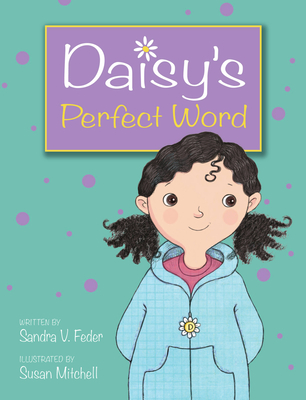
Daisy's Perfect Word by Sandra V. Feder illustrated by Susan Mitchell

Daisy loves words. She loves the way they sound and the way that her mouth moves as she says them. She loves saying them and reading them and hearing them. Daisy likes other things, too, like her friends, her family, and her teacher, Miss Goldner. Miss Goldner has just announced that she is getting married and moving away. Daisy is happy for her (engaged is a wonderful-sounding word) but also sad that she won't be able to see Miss Goldner around school anymore. Daisy knows what the perfect present for her teacher would be: the perfect word. Now all she has to do is find it!

Talking about words is almost like a sneaky way of talking about reading where you're not necessarily talking about reading at all; even kids who aren't strong readers can have favourite words, and talking about words and playing with words is a great way to make literacy fun. There was a nice building of suspense as Daisy was trying to find the perfect word for her teacher. What would it be? How could any word be perfect? Daisy is a great character; she loves words and thinks about them a lot, but she's also does regular kid stuff like eating chocolate treats and getting excited over a sleepover. I think Daisy's love of books, reading, and words will resonate with kids who also love books and reading, and they will be rewarded with rich words and clever passages. (I particularly liked the description of Daisy's neighbour Samantha as a girl who liked the words 'stop' and 'mine.') A quick look at Sandra V. Feder's website confirms that more Daisy books are on the way; look for the next one in Spring 2013.

I received a review copy from NetGalley courtesy of Kids Can Press.

Find it at IndieBound.

Read it with:
Fancy Nancy: Splendid Speller by Jane O'Connor
13 Words by Lemony Snicket
Clementine by Sara Pennypacker
Kylie Jean, Spelling Queen by Marci Peschke

Monday, July 16, 2012

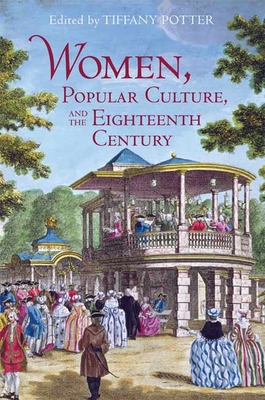
Women, Popular Culture, and the Eighteenth Century edited by Tiffany Potter

The eighteenth century is quite present in the twenty-first century. It's found in the Jane Austen novels read by bookclubs and the movies that are made from those novels. It's in our ideas of performers and performance, writing and writers, and romance. It's in the way we think about the past and how the past informs the present. Women, Popular Culture, and the Eighteenth Century brings together the work of scholars from Canada, the United States, and around the world who explore the construction of culture and pop culture over the last four hundred years and what it means for women and society today.

When I saw the title of this book in NetGalley, I knew I had to read it. I love reading about popular culture and I have spent a lot of time thinking about women and femininity, so this seemed like a perfect fit. I was extremely pleased to find that the book not only covers culture in the eighteenth century but also how it exists and interacts in today's world. Recent film adaptations of Jane Austen novels, novels set in the seventeen hundreds, and mash-ups (like Pride and Prejudice and Zombies) are all explored. There were also several areas that I had not read about before, including the role that women played in the development of the cookbook industry, stage performances and how they mirrored and directed ideas of womanhood, and the phenomenon of riddles and quizzing. The book has an academic tone and approach. It's been a few years now since I did a lot of academic reading for school, but that didn't stop me from enjoying this book. If you have an interest in any one of the three areas mentioned in the title make sure to check this book out; if you have an interest in more than one of the areas, this is the book for you.

I received a review copy from NetGalley courtesy of University of Toronto Press.

Find it at IndieBound. 

Read it with:
Northanger Abbey by Jane Austen
Slammerkin by Emma Donoghue
Love in Excess by Eliza Haywood
Artistic Impressions by Mary Louise Adams
According to Queeney by Beryl Bainbridge

Sunday, July 1, 2012

Little Canada by Matt Napier illustrated by Renné Benoit

Canada isn't a little country. It has ten provinces, three territories, and is the second largest country in the world in terms of area. It can be difficult for young children to understand: what is Canada? This board book can help answer some of those questions. Set up in a question-and-answer style, the book explores lots of Canada's common symbols, animals, and cultural aspects. There's enough of a pause (and some visual clues) that kids have a chance to figure out the answer; books that encourage them to talk and use their words help to build their confidence when it comes to language and literacy. I'll admit that it was a bit strange to see the appearance of poutine (delicious, delicious poutine) in a children's picture book, but it also seemed to fit into the style of the book. (The mid-book plug for Tim Horton's, too, was a bit of a surprise, but in terms of Canadian culture, not out of place). The board book pages are sturdy for young readers, and it would make a good gift for new Canadians, ex-pat families, or people wanting to make sure that their little ones grow up with the appropriate amount of Can-con.

Happy Canada Day!

Learn more about Matt Napier and Renné Benoit.

Find it at IndieBound. 

Read it with:
Canada by Liz Sonneborn
Z is for Zamboni: A Hockey Alphabet by Matt Napier
Fraser Bear: A Cub's Life by Maggie De Vries
Good Night Canada by Adam Gamble

Saturday, June 30, 2012

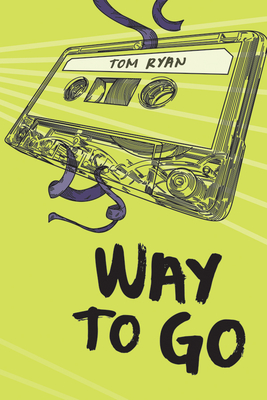
Way to Go by Tom Ryan

Danny's life is going nowhere. He's not confident like his friend Kierce, who has a rule for every situation. He's not laid-back like his friend Jay, who's in danger of not graduating but doesn't really care. Danny wants to be confident and he wants to be above caring about what people think...but he's not. He's pretty sure that he's gay but doesn't want to tell anyone; he's not prepared to deal with the reaction in his small town. He gets a summer job working in the kitchen of a new restaurant. That's where he meets Lisa, a complicated New York City girl with a love for making mixed tapes. If he would fall in love with any girl, it'd be Lisa...maybe it could be Lisa. In a summer of discovery, Danny will come to terms with who he really is and what that means for the rest of his life.

Aside from a few references (like the mixed tape on the cover), it was easy to forget that the book took place in 1994. One thing that kept reminding me was the hateful language and fear that accompanied any mention of gayness. I know that this language didn't end in 1994 (and that it - and worse - continues today), but the language that Danny's classmates use (particularly Kierce) is just...unreal. Except that it was and is real, which is so awful that awful can't even begin to describe it. There were also a few phrases throughout the book that stuck out as sounding more present-day, but since I'm not a linguist (is that even what linguists do? date phrases to a certain time period? If not linguists, who does that? is that a job?), I can't say for sure that they weren't around in 1994. Anyway. Danny's coming of age summer is about more than just his sexuality; he's also discovering who he wants to be as a person and what he wants to do as a career. His relationship with his father is going through changes as Danny becomes closer to being an adult; at the restaurant (and in his off hours), he learns about what friendship is and what he wants for himself. (His younger sister has one of those Vanessa Pike-esque language afflictions that I'm sure must exist in real life but I've only seen in books - she talks mostly in movie quotes. I do like, though, their sibling relationship). This book's Canadian-ness sets it apart from a lot of other coming of age novels, and that's important, because while Canada shares a lot of culture with America, there are some differences. I'm really excited to read more from Tom Ryan in the future.

Check out Tom's website, Tom Wrote That.

Find it at IndieBound. 

Read it with:
Gravity by Leanne Lieberman
Mercury by Hope Larson
The Screwed-Up Life of Charlie the Second by Drew Ferguson

Friday, June 29, 2012

The Last Titanic Story by Chris Angus

Laura Engalls has made what she believes to be an incredible discovery. An anthropologist working in Greenland, she's uncovered evidence linking an unknown part of Titanic history to a local tribe of Inuit people. She enlists the help of a journalist and author of a book about the Titanic, Matt Mosher. Intrigued what Laura is proposing, he agrees to join her on her quest. A terrible storm hampers their entry into Greenland and what began as a journey to find the truth quickly turns into a quest for survival. Further complicating their actions are the mysterious persons who are following them - and attempting to kill them. Just what sort of information has Laura Engalls uncovered? And is it information worth dying for?

Sometimes when I'm talking about books, I feel a bit like Stefon from Saturday Night Live. This is one of those books that would lend itself to a Stefon-esque update. It has Nazis and Titanic survivors, stolen treasure and gunfire, action, adventure and even a touch of romance. The story jumps between different time periods: one starting in 1912, one during the time of World War II, and one in the present day. I was quite curious about how all of these strands would come together, but ultimately they did fit into a single coherent story. There were several masterful cuts between chapters/time periods that were almost cinematic in feel. There were a few things that puzzled me (having unprotected sex, even if it's "I'm glad we're alive and I'm attracted to you" sex, doesn't seem like the smartest move if you're trapped in the wilderness with no idea if rescue is possible) but since I've never been in a life-or-death exploration setting, I have no idea if this behaviour is as strange as I found it. And, of course, this is relatively minor compared to the forward momentum that the action and adventure of the novel provide. If you read only one book this year that combines the Titanic, World War II, modern day neo-Nazis, and a high stakes treasure hunt across Greenland - let it be this one.

Find out more about author Chris Angus.

I received a review copy from NetGalley courtesy of Iguana Books. 

Read it with:
The Monuments Men by Robert M. Edsel
Titanic: Shipwrecks and Sunken Treasure by John Malam
Iceberg Right Ahead! by Stephanie Sammartino McPherson
Shattered Hopes: Canada's Boycott of the 1980 Olympic Games by Sheila Hurtig Robertson

Thursday, June 28, 2012

Margaret and the Moth Tree by Brit Trogen and Kari Trogen

Once upon a time, Margaret had two parents. They were wonderful parents who loved her and took great care of her. Then they died, and Margaret lived with different relatives until they all died, too, and there was no one else to look after her. Margaret was sent to the Hopeton Orphanage by the women of the Concerned Ladies Club, but what seemed like a cheerful place upon arrival was, as Margaret quickly found out, a terrible place ruled by a terrible woman named Miss Switch. Miss Switch kept all the money and the good things for herself and divided the children into two groups: the Pets and the dregs. The Pets are her favourites while the dregs...well, it's not good to be a dreg. Margaret spends her days being quiet, so quiet that she's able to hear things that other people can't. That's how she discovers the moths and the moth tree, a discovery that will change her life (and the lives of the other children at the orphanage).

I almost feel like I should put up some sort of disclaimer; the authors are friends of a friend of mine, although we've never met (though that is how I first discovered the book). While the moths are included in the title (and on the cover) my favourite parts of the book focused on Margaret in the orphanage; they read like a cross between Annie and Matilda (with, although probably from only my perspective, a touch of The Cider House Rules). Margaret is a great character. She's a smart girl who has had an extraordinarily difficult life. My heart broke for her and all of the children who are treated so poorly.  This is a fantasy book but a mild one; rather than turning to the common supernatural characters it looks toward nature and connecting with the living creatures around you.  Margaret and the Moth Tree could easily do for moths what Charlotte's Web did for spiders - take some ordinary insect commonly thought to be a bit icky and fill it with the possibility of magic and wonder.

Visit Kari Trogen's website for more info about her and Brit Trogen's website for more info about her.

Margaret and the Moth Tree is published by Kids Can Press.

Find it at IndieBound.

Read it with:
Matilda by Roald Dahl
Everything on a Waffle by Polly Horvath
Charlotte's Web by E.B. White

Saturday, June 23, 2012

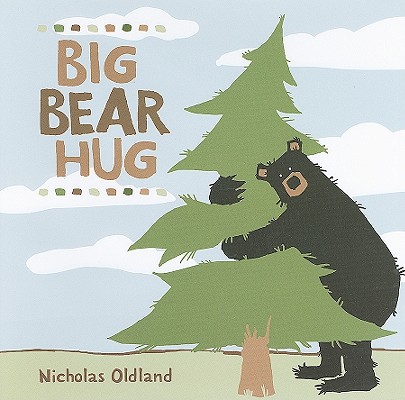
Big Bear Hug by Nicholas Oldland

There is a bear who lives in the forest. He loves to give hugs to the other animals. He specializes in bear hugs, because, well, he's a bear. But his favourite things to hug are trees. One day he sees a man staring at a tree. He thinks that this must mean that the man loves trees as much as he does! But if that's true, then why does the man have a chainsaw...?

I've only recently found Nicholas Oldland's picture books, and I'm having my usual reaction when I come across something that's so awesome: where have I been all this time? I love the dry writing style and the solid art style; I love the expressions on the animals faces and the small touches on every page.  This book has a lovely pro-nature, pro-hugs agenda, and it should be read by a lot of people who need to hear this message. It's a great book to use with kids as a springboard for discussion questions: why would someone want to cut down trees? is it okay to hug people who might not want to be hugged? how can you help someone who is hurt to feel better? Don't make the same mistake that I did; don't wait to read this book.

Find it at IndieBound. 

Read it with:
Making the Moose Out of Life by Nicholas Oldland
The Busy Beaver by Nicholas Oldland
You Will Be My Friend! by Peter Brown

Tuesday, June 19, 2012

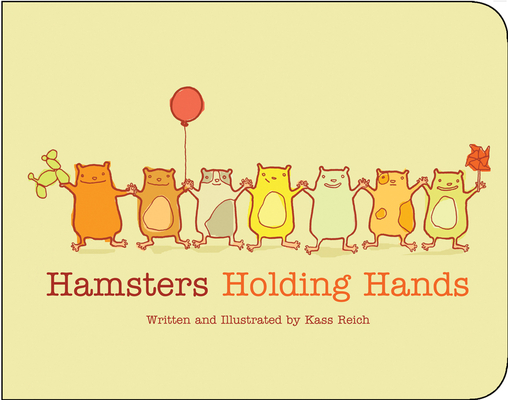
Hamsters Holding Hands by Kass Reich

Hamsters can do many different things. They can play together and they can eat together. They can enjoy the sun and jump in the air.  Count from one to ten with these friendly hamsters and they will show you all the things that they love to do. Hamsters can do a lot of different things, but they have the most fun when they're together.

There's a lovely quiet charm about this board book. It outwardly looks very simple: a counting book from 1-10, featuring hamsters doing different activities. And yet, there's something in its design that transcends this description. The look of the book uses lots of oranges, yellows, and greens; it doesn't feel like your traditional picture book palatte. The back cover of the book promises hamsters that are cute and loveable, and I totally agree.  They're just so happy about everything that they're doing. The text rhymes between the numbers (the line for 1 rhymes with the line for 2), and it's set up so that the numbers themselves aren't rhyming with words (which is good because seven is always very tricky to rhyme). Definitely check this book out for young readers or kids practicing their numbers (and libraries should add it to their board book collections).

See more of Kass Reich's work at her website.

Find it at IndieBound. 

Read it with:
One Grey Mouse by Katherine Burton
Ones and Twos by Marthe Jocelyn
Canada 1-2-3 by Per-Henrik Gurth

Thursday, May 31, 2012

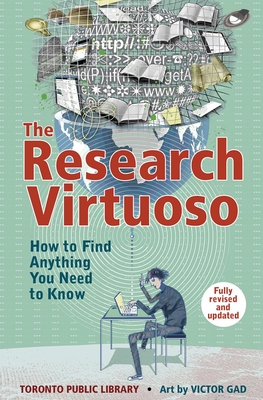
The Research Virtuoso: How to Find Anything You Need to Know by the Toronto Public Library with art by Victor Gad

Research: if you're in school, you're going to have to do it at some point. There will be a class that requires an essay or a project and you will have to know how to find information, assess it, and bring it together in a meaningful way. It can seem like a daunting task, and there are so many different ways that you can go about it. The Research Virtuoso can help you clarify your assignment, collect your thoughts, and follow through with a solid end result. This is one book that could help you get an A - and help you build some skills you can use throughout your life.

This is an updated edition of an earlier publication, which is a very smart move considering all of the ways that today's technology plays a role in information gathering. Online resources are covered (including Wikipedia and the standard cautions around using it as a definitive source) but they are found alongside print resources and subscription databases. In addition to instructions about how to research a topic The Research Virtuoso also includes templates and tips to get you started. There are definitely some ideas that I wish I knew about when I was in school. The tone is authoritative (and it should be, coming from the Toronto Public Library) but not stuffy; if this book was a person, it would be your cool older cousing who's in graduate school. This might not be a book that high school or university students run to pull off of the shelves (or maybe it is), but it's definitely a book that they should look into.

I received a copy from NetGalley courtesy of Annick Press.

Find it at IndieBound. 

Read it with:
Research Ate My Brain by The Toronto Public Library
The New York Public Library's Guide to Research by Deborah Heiligman
Painless Research Projects by Rebecca Elliott

Saturday, May 19, 2012

The Taming by Teresa Toten and Eric Walters

Katie has worked hard to be invisible. It's what allows her to slip through the halls at school unnoticed; it's what has kept her safe from some of her mother's boyfriends. Evan lives on being noticed. He knows when people are watching him and just how to keep their attention. He arrives at a new high school - Katie's school - just as the rest of the student body is discovering Katie through her brilliant rehearsals in the school production of The Taming of the Shrew. She's like another person on stage, a confident person capable of commanding everyone's attention. Offstage, she takes on another new role: Evan's girlfriend. Could this be her chance at happily ever after...or will this story take a dramatic turn?

(Spoilers below)

This book definitely surprised me; the book that I read was not the book that I thought I was reading. As the story went along and Evan revealed more of himself and his personality, I was surprised that I hadn't caught on to him before. Was I blinded by his dashing persona and his easy confidence? Maybe. I knew that he had a bit of a murky past, but I thought he would turn out to be the misunderstood bad boy with a heart of gold...not a controlling manipulator with scary ideas about women and sex. My own confusion made it easier to relate to Katie. Reading about her own lack of self-confidence and her shame over her life with her mom was hard. It was great to see her bloom on stage, but awful to see that ripped away from her. Both perspectives - Katie's and Evan's - were very strongly written and I appreciated being able to get inside of their heads and see their perspectives. This is definitely a book that should be shared with any at-risk teen readers as well as anyone who likes novels that look at the psychological aspect of relationships.

Find it at IndieBound.

Read it with:
The Taming of the Shrew by William Shakespeare
Me and the Blondes by Teresa Toten
End of Days by Eric Walters
Illyria by Elizabeth Hand

Monday, April 23, 2012

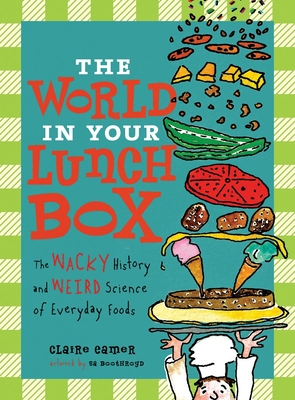
The World in Your Lunchbox by Claire Eamer illustrated by Sa Boothroyd

There's an incredible history to the things that we eat every day. Fruits, vegetables, meats, grains, dairy products, spices, condiments...so much of what makes up our daily diets is stuff that our ancestors might eaten in some form or another. Wars have been fought over food; it shaped the way that the earth was explored. Changes in science and technology have meant that food can stay fresher longer and we have access to many different kinds of foods. Take a moment to think about all of the food that you eat in a week - how much do you really know about it?

I know it's such a cliched reaction, but in every chapter I was saying to myself "I didn't know that!" There's something really neat about discovering the history of things that are so common, and learning more about the science of taste helped me to understand why I like the foods that I like. Set as a child's class project, there's sections on science, history, and even some groaner-worthy food puns. The book also have a positive message around eating healthy and making good food choices. A great pick for classrooms and libraries looking to have some high-interest books in their non-fiction collections.

Check out the websites of Claire Eamer and Sa Boothroyd.

I received a review copy from NetGalley courtesy of Annick Press.

Find it at IndieBound.

Read it with
Lizards in the Sky by Claire Eamer
50 Underwear Questions by Tanya Lloyd Kyi
Who Wants Pizza? by Jan Thornhill

Wednesday, April 11, 2012

I Will Not Read This Book by Cece Meng illustrated by Joy Ang

One little boy has an annoucement: he will not read this book. No matter how what happens, the book will not get read. He can be hanging from a cliff, there could be a monkey involved, it could be a life-or-death situation and he would still not read this book. Is there anything that could happen to change his mind?

Books about kids who don't want to read books present a reassuring line to people who don't see themselves as readers. As much as I love to see kids enthusiastically grabbing and pouring over books, I know that there are probably just as many kids who aren't likely to pick up a book on their own. One of the strengths, I think, of the book is that (spoiler alert) it doesn't swing all the way to the other side of the spectrum at the end of the book. The boy doesn't become a passionate advocate of reading; he doesn't decide that he loves books after all. He grudgingly accepts that reading might not be so bad, especially if his mom will read with him. And to me that's a much more realistic ending for a boy like this one. The story used humour effectively and the wide-ranging scenarios that the boy imagines make it exciting and dangerous while still in a safe environment. I responded very positively to Joy Ang's illustrations and the different expressions that the boy adopts over the course of the book. I could easily see this book as an animated short movie (both in story and look). This is a fun book to share with kids - both kids who see themselves as readers (it will be absurd to see a kid go to such lengths to avoid reading) and those who do not (who might find it reassuring to know that there are other people out there who feel like they do, even if they are fictional characters).

Find it at IndieBound. 

Read it with:
Tough Chicks by Cece Meng
The Qalupalik by Elisha Kilabuk illustrated by Joy Ang
Miss Brooks Loves Books! (And I Don't) by Barbara Bottner
Green Eggs and Ham by Dr. Seuss

Wednesday, April 4, 2012

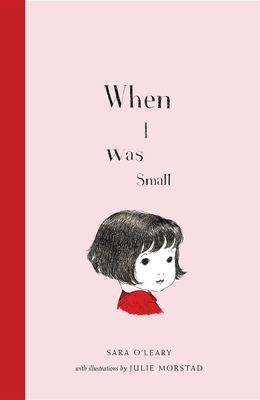
When I Was Small by Sara O'Leary with illustrations by Julie Morstad

Henry knows all about his own history. He knows all about what he was like when he was (an even younger) boy. But he's curious about his mother. What was she like as a little girl? He wishes that they could have been friends. So his mother tells her what she was like when she was small.

As a fan of Sara O'Leary and Julie Morstad's previous collaboration, When You Were Small, I was quite excited to find this book peering back at me from a library shelf. The text is short and spins readers off into a gentle fantasy world. The illustrations seem both vintage and timeless. They're lovely with a whimsicality that at the same time seems entirely natural. Julie Morstad is one of my favourite illustrators. Children and caregivers can talk about the content of the book (do you think these things really happened? do you think part of it is true?) as well as the idea behind it. It's a great prompter for sharing your own family stories and personal history with kids.

It looks like this book was released in Canada in December of 2011 and seems to have a US publication date of August 2012.

Check out their websites for more about Sara O'Leary and Julie Morstad.

Find it at IndieBound.

Read it with:
When You Were Small by Sara O'Leary
Where You Came From by Sara O'Leary
Singing Away the Dark by Caroline Woodward and Julie Morstad
Oddfellow's Orphanage by Emily Winfield Martin

Wednesday, March 28, 2012

What to Expect When You're Expecting Hatchlings by Bridget Héos with illustrations by Stéphane Jorisch

Are you a crocodilian parent-to-be? Congratulations! You're expecting a hatchling! Wait - make that several hatchlings. The next few months will be a busy time. There are eggs to lay, nests to make, and predators to ward off. And once the babies arrive they'll be so small that they'll completely depend on you for protection. But don't worry - within two years they'll be off on their own. You're about to embark on a wonderful journey of parenthood!

After previously reading about kangaroo parents and parents of larvae, I knew that I was in for a treat with What to Expect When You're Expecting Hatchlings. Baby alligators and crocodiles weren't something I'd ever given a lot of though about before, so I had a lot to learn. This third book has the same tongue-in-cheek humour of the other two, and the illustrations seem zany and down-to-earth at the same time (they have a healthy streak of realism mixed with a large dose of anthropomorphism). This book is a great fit for classrooms, school/public libraries, and the personal shelves of kids who have a curiosity about the natural world.

Learn more about Bridget HĂ©os at her website. 

I received a review copy from NetGalley courtesy of Lerner Books.

Find it at Amazon.

Read it with:
What to Expect When You're Expecting Joeys by Bridget Héos
What to Expect When You're Expecting Larvae by Bridget Héos
Alligators and Crocodiles by Gail Gibbons

Friday, March 16, 2012

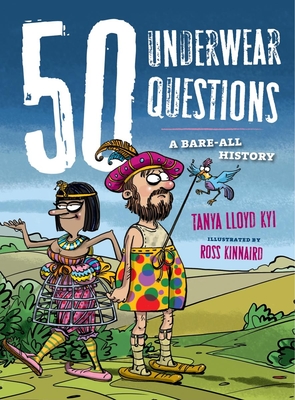
50 Underwear Questions: A Bare-All History by Tanya Lloyd Kyi with Illustrations by Ross Kinnaird

Underwear. Most people use it, but how many of us know anything about its history? Underwear didn't always look like what we use today. It's changed a lot over the decades and centuries, and so have ideas about modesty and coverage. Do you have any underwear questions? This bare-all history has all the answers you've been looking for!

Underwear is a topic of perennial fascination to children. It seems a bit naughty, but it's also so common. With a funny, easygoing narrative style mixed with humorous illustrations, this non-fiction title has lots of reader appeal. It charts how underwear went from simple (loincloths) to elaborate (corsets, long johns, petticoats) and back to simple again (thongs), and all of the points in between. It hints at underwear's connections to ideas of politics and gender and talks briefly about the role that economics and climates play, but much of that is glossed over in favour of keeping the timeline moving (a solid directional choice, given the intended audience for the book). For interested readers, a bibliography and a list of titles for further reading might help to explore some of these themes. Annick Press has a number of strong non-fiction titles for curious readers that are well worth checking out.

Check out her website for a glimpse into Tanya Lloyd Kyi's brain. Ross Kinnaird also has a blog where you can see more of his illustration.

I received a review copy from NetGalley courtesy of Annick Press.

Find it at IndieBound. 

Read it with:
50 Burning Questions: A Sizzling History of Fire by Tanya Lloyd Kyi
50 Poisonous Questions: A Book with Bite by Tanya Lloyd Kyi
Bear in Underwear by Todd H. Doodler
The Revealing History of Underwear by Katie Daynes
Underwear: What We Wear Under There by Ruth Freeman Swain

Thursday, March 8, 2012

Shattered Hopes: Canada's Boycott of the 1980 Olympic Games by Sheila Hurtig Robertson

In 1980, the United States announced that it would boycott the Olympic Games that were being held in Moscow as a protest against the Soviet Union's invasion of Afghanistan. It was soon announced that Canada would be joining the boycott. For the athletes who had been working towards this event for years, the decision was heartbreaking, hurtful, and devastating. Some athletes focused on attending the Olympics in 1984 (an event marked by a Soviet-led boycott of the US-hosted games), some continued on as coaches and advisers, while others left their sport altogether. Decades later, the emotions that the athletes, coaches, and officials left are still clearly evident as they look back at the Olympic dream that never was.

Since I became interested in learning about the Olympics, I have known about the 1980 and 1984 boycotts as facts on a page; I had not stopped to consider what it must have been like for the people at the time. Similarly, I had not thought of in terms of a Canadian context: the 1980 boycott followed the 1976 Montreal Olympics and came just before Calgary was announced as the host city for the 1988 games. It is almost impossible to imagine Canada not sending a team to the next winter Olympics after Vancouver; the momentum that comes from building a strong national team would completely disappear. The lack of communication (and clear communication) in 1980 is almost unthinkable today, too. And the timing - many of the Olympic qualifying events were held after the announcement of the boycott.  This analogy might strike some as going too far, but while reading many of the accounts, I couldn't help but think of a mother who gives birth to a baby that she knows has already died when hearing about the athletes who had to go through with the Olympic Trials after they knew there was not going to be an Olympic Team. The loss that many of them speak about strikes that deep. Even for those who had previously been at an Olympics (or would attend a later one), the experience of missing out on the 1980 games drastically changed the course of their sporting lives. It was fascinating to read the different interpretations of what had happened, each coloured by the individual's perspective and memory. The Olympic Team event in Toronto (a dinner and medal presentation for the athletes and coaches followed by a Gordon Lightfoot concert), for example, is remembered by different people as a nice gesture, as too little too late, an exclusive event not open to all athletes, and as a meaningful ceremony. The frustration that comes from now viewing the boycott as a meaningless gesture (particularly when other trade and sport sanctions were not invoked) makes the situation difficult to understand. In many of the interviews, it's clear that vague threats to boycott the 2008 Olympics were present in the minds of the athletes, but it is difficult to picture a boycott of the same magnitude now that the Olympics (and amateur sport in general) occupy a different place in the TV and economic world. The stories collected in this volume tell a story that has too long been silent. This is recommended reading for any fan of Canadian or Olympic sports.

I received an advance review copy from NetGalley courtesy of Iguana Books.

See more about Shattered Hopes at Iguana Books

Read it with:
Inside the Olympics by Nick Hunter
Inside the Olympics by Richard Pound
Taking the Lead: Strategies and Solutions from Female Coaches by Sheila Hurtig Robertson

Tuesday, February 28, 2012

Friends with Boys by Faith Erin Hicks

Most people don't have their first day of school when they're in high school, but most people aren't Maggie. She's always been homeschooled by her mom and the only classmates she's known have been her brothers. But now everything's different. Her mom left, her dad's the chief of police (and cutting his long hair!), she's starting high school with a bunch of strangers, and she's being haunted by a 19th century ghost. Getting through the day has never been so complicated.

I really enjoyed this book. Maggie is the anchor of the story; when she's in a scene with other characters she grounds what's happening and blends into the group, but when she's alone she grows to fill the entire page. Her eyes give away her fear, sadness, surprise, and - more rarely - happiness.  Friends with Boys includes high school staples like identity, fitting in, and friendship, but with a family spin (both with Maggie and her brothers and her friends, siblings Lucy and Alistair). I love explorations of families, particularly the relationship between brothers and sisters and how you can know someone so well in one persona (like Maggie knows her brothers in their role as brothers) but not in another part of their lives (how little she knows about their lives at school). I'm so excited for people to discover this book and get to know Faith Erin Hicks' storytelling and style.

For more information, check out Friends with Boys online and Faith Erin Hicks' website.

I received an advance review copy from NetGalley courtesy of First Second.

Find it at IndieBound.

Read it with:
Anya's Ghost by Vera Brosgol
Page by Paige by Laura Lee Gulledge
The Gravesavers by Sheree Fitch

Friday, February 17, 2012

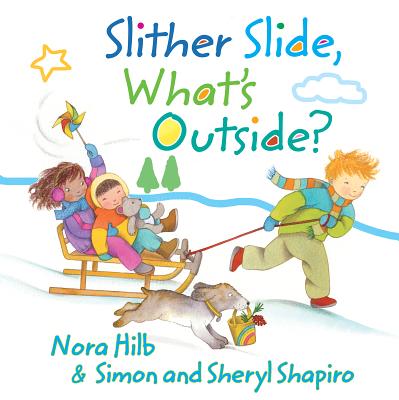
Slither Slide, What's Outside? by Nora Hilb & Sheryl and Simon Shapiro

There are so many things in the world that can inspire creativity. Spring brings with it all kinds of fun things, like trees in blossom and wiggling worms. The sky has lots of beauty and mystery, like stars and rainbows and a soft summer drizzle. As the seasons change and the world reveals more awesome sights, it becomes clear that there is so much in nature that can inspire and spark creativity in children.

I love the combination of drawings and photographs that this book uses. This approach will appeal to a number of kids who like different styles of art and representation. There's also a really nice message running through the book about the beauty of nature and its power to inspire. Reading this book and acting out some of the passages is a great way to foster literacy skills with children.

Find more information on Nora Hilb here .

I received a review copy from NetGalley courtesy of Annick Press.

Find it at IndieBound.

Read it with:
Better Together by Sheryl and Simon Shapiro
Up Cat by Helen Hutchins
Look Book by Tana Hoban
Urban Animals by Isabel Hill

Thursday, February 16, 2012

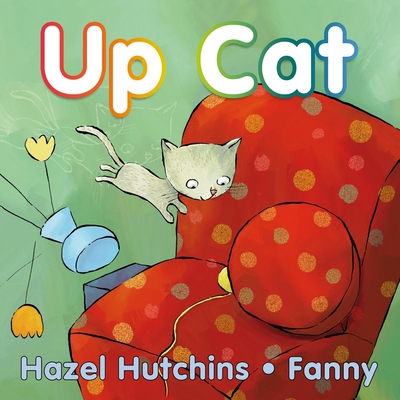
Up Cat by Hazel Hutchins with illustrations by Fanny

What does a cat get up to all day? Well, there's waking up, washing up, and tossing up toys. There's lapping up milk and creeping up on furniture (and scratching up furniture, too...). They love to size up different items and soak up the sun. You'd be amazed all that can be done in a day!

As a non-animal person (or rather, someone who likes animals from a distance), this book is a perfect example of why I don't feel the need to have a cat in the house. But as a book for young children, it has great repetition, fun illustrations, and lots of common words, phrases, and images. It's a perfect companion to Up Dog (who even has a cameo here) and likely to be a favourite among animal lovers, big and small.

Find it at IndieBound.

Learn more about Hazel Hutchins at her website.

I read a review copy from NetGalley courtesy of Annick Press.

Read it with:
Up Dog by Hazel Hutchins
The Quiet Book by Deborah Underwood
Mattland by Hazel Hutchins and Gail Herbert